Monday, January 20, 2014

I Know, Let's Talk About the Week!

How was the week? 

Academically, we read Oedipus Rex, we did an inventory of Greek terms, and we learned a lot about the myth of Oedipus this week. That's just Language Arts, though. In Pottery, I made salt and pepper shakers that are the Adipose from Doctor Who. They turned out really well and they're adorable. 

 
Here they are. Pretty good, yeah?

In Health, we didn't do much. I'm still a little confused about what we're supposed to be doing in that class. In Math we learned about logarithms, in Biology we learned more about muscles, and in Spanish we got new vocabulary about performing. So I learned a lot of cool stuff and got distracted quite a bit, as per the norm.

But how was the week in general?

Well, it wasn't entirely dreadful, as weeks go. I didn't kill anyone, so that's a plus. For those of you out there who don't understand sarcasm, of which there are a discouragingly huge number, that was a joke. 

Also, in case you haven't guessed it by my tone, which is, granted, rather difficult to discern through words alone, I am feeling done with people in general. Which is why it is a miracle that nobody is dead by my hand.

Annoyances aside, the week was actually fairly normal. Classes weren't any harder, nice people were still nice, annoying people still annoying. I don't know. Not much happened. As weeks go, it was an average one. And the fact that it was average is the reason why it was so terrible. 

But it wasn't all that terrible. I mean I have friends to eat lunch with, I have a house, I have food, etc. And I don't want more physical things from life, I kind of just want to be more fulfilled. I want to do something with my life, something less mundane then just school, homework, barely sleep, repeat. It's boring. And I want to see the world. 


That got really deep and really weird really quickly. If you're still reading, thanks for putting up with me.

Thursday, January 16, 2014

Oedipus Inventory

Oedipus is the protagonist of Oedipus Rex. He is the one whom the terrible and gross prophecy is about, and he is the one who accidentally goes forth and follows it by running away from it. Then he fornicates with his mother, and later tears his eyes out at the horror of it. An understandable reaction, but also fairly extreme.


Oedipus Rex the play is about more than just Oedipus and his seriously messed up family. It encompasses what happens after the myth, which is basically Oedipus' backstory. The play is considered a tragedy, and one of the main themes is man versus the gods. Also, the idea that everyone has an inescapable fate that is theirs alone plays a big part in the play.


Finally, in the Oedipus Inventory Oedipus Trilogy, there is Oedipus Rex, the myth. The myth is what adds most of the character to Oedipus Rex the character. The myth goes that Oedipus had a stake driven through his feet when he was just a baby, since he got a prophecy from the Oracle of Delphi that did not bode well at all for the kingdom. Then a servant who was watching brings Oedipus to the neighboring kingdom to be raised as a royal baby. The way they found him is the reason why his name is Oedipus, since it means "swollen foot". Oedipus then goes on the road, and on his way he kills his father in a fit of road rage, makes it to his old city, defeats the Sphinx by solving a riddle, and then wins his mother's hand in marriage as the prize for saving the city. That is about where the play picks up the story. 


Next up is the Oedipus Inventory Aristotelian Trifecta (that sounds so cool). Aristotle himself was a huge deal in philosophy, and is still quoted and learned from today. He also was one of the first people to come up with a system of reasoning, otherwise known as logic. One of his greatest literary achievements was the idea of the tragedy, which is the idea that someone's life could just sort of generally degrade until there is not much good left and they claw their eyes out (only sometimes metaphorically) or that everybody dies except the one telling the story, which is rarely the main character.


Specifically, Aristotle's idea of a tragedy fits Oedipus Rex the play very well, as he was a great admirer of Sophocles's play, considering it the perfect tragedy. He said that a tragedy needs to have six parts; plot, characters, diction, thought, spectacle, and melody. Some of those seem more fitting to a song than a play, but to each his own. Aristotle's tragedy format is still in use, and is quite applicable to today's works as well as it was to the ones from BCE. 


The final piece categorized under Aristotle is hubris. Aristotle mentions it in his description of a tragedy, saying that tragedy must include hubris amongst a host of other character flaws and problems. Hubris is a state, not entirely unlike arrogance, but also very different from that since it does not translate perfectly into English, but it is the opposite of being humble and striving to do your best. As soon as you believe you have reached arĂȘte (which is the opposite of hubris) then you have fallen into hubris, for you believe that your best is simply the best and that there is nothing you can't do.


Dramatic irony is when the audience knows something that the characters do not. In most cases, it is knowing how the play (or movie, or book, or whatever) is going to end, but sometimes it is something smaller like having an alternate perspective for a few moments so the audience knows what the bad guy is up to while the audience is oblivious. Perhaps the most famous story with dramatic irony is Romeo and Juliet, where the audience is literally told the plot of the entire play in the first paragraphs. There are many other examples throughout modern stories, also. 


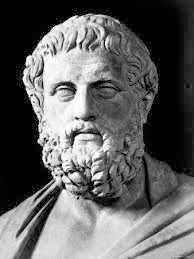
Sophocles is the guy who wrote Oedipus Rex. Without him, Language Arts classes everywhere would be so very different. But more importantly, he inspired a lot of people. Freaking Aristotle thought this dude was impressive for writing the perfect tragedy. He was one of classical Athens' three great tragic playwrights, and he was very attached to and involved in his city of Athens. Basically, he was a really famous guy of his time, and he was also really smart and really good at what he did. 


Teiresias is important, and he also shows up in The Odyssey, another Greek classic. Teiresias was the blind prophet of Thebes. He saw Athena bathing, so she blinded him, but at his mother's pleas Athena granted him the gift of prophecy as compensation. He gave Oedipus his fateful prophecy, helped Odysseus with Poseidon, and made a prediction of the greatness of Hercules. 


Fate plays a huge role in the story of Oedipus. The idea that there were three little-old-lady-celestial-beings-with-yarn making sure that you followed your destiny was a big belief with the Greeks. Everyone has their own prophecy, and nobody can escape their fate. The three fates determined what you were going to do, how much misery and fulfillment you got, and when you die. Cheery, right?


The final installment in the Oedipus Inventory is the Greek Theater. Greek Theater pioneered comedy and tragedy, now considered to be staples in any respectable theater. Plays were performed outdoors with a sloped seating area so everyone could see, and the seats curved around the stage so that the people could see every angle of the action. Also, no violence was ever shown on stage, just implied. Most of the great Greek plays are still considered classics today, and are still enjoyed by many.

Monday, January 13, 2014

Baraka

Baraka was a moving, deep, and powerful film. It managed to connect the entire world into one being with nothing but images and songs. There were no words throughout the entire movie, and that was incredibly impactful. It relates to world literature because it managed to speak the language of the world. The world has so many different people in it, so many races and religions and cultures, but Baraka showed that when it comes down to it, we really are all the same. World literature comes from all over the world, from people everywhere trying to make sense of things their own way, how to fit into the greater whole. In general, there are always only three types of stories told a million different ways; boy meets girl, fish out of water, and coming of age. But these three themes are in every story worldwide. Through our stories, the entire world is connected. And Baraka conveyed that with no words. In first semester, we studied satire, the hero's journey, and an allegory. And we managed to combine all of those in our minds, making sense of them and relating them to each other through the One Great Heart speech. This further proves that everything there is in writing is connected somehow. All the stories are all still part of this same world. They are their own little realities, tucked into pockets of the one true reality we live in. Whether conveyed by fantastical images of the real world, so beautiful it seems they cannot exist, or words showing how far our own consciousness and imagination can take us, the same simple truth remains. Everything is connected.

Watching the various religious rituals, especially the cremation and the monkey dance, were moments of awe. Seeing those felt like that was real, more real that problems like good grades and waking up on time. Having a real life like those people, seemingly so uninhibited from their hopes and dreams, is infinitely preferable to always being told your wishes are only that and your goals are out of reach. Knowing that there are people who have that kind of life, and that it is possible to have that kind of life, was wonderful news. Seeing the homeless people on the streets, foraging for food in a dump, hit hard in a less good way. I felt like I have been wasting my life, living in such excess compared to them, and I have done nothing, though there are things I could do, to help them. How could I live with so much when there are others out there with so little? Seeing that basically felt like a battering ram to the heart, plus a rethinking of many morals and problems. However, since there are things that I can do, seeing those images ultimately felt good, and leading to compassionate actions. Some of the most impactful images in the movie were also the saddest, unfortunately. In particular, seeing the concentration camps, the heaps of shoes, the photos of the victims tacked up on the walls were the images that meant the most to me. Anything that has to do with the Holocaust is kind of a big deal for me. I don't frequently broadcast the fact that I am Jewish, but it is a fact, and seeing images like that was very difficult for me. Even the concentration camps that were not German were too similar, and were based off the same model if not a worse design. Even if I didn't have such a personal connection to those images, I would still find them the most memorable and disturbing because seeing how many innocent people died for a single stupid reason matters. Anyone dying, regardless of what they've done, matters, because there is not one person anywhere that is not important. It's like pulling on a single thread and an entire sweater coming unrolled. Every person is essential. 

My idea of a moving and impactful image differs greatly from Brussat's. She thinks that beauty and awe is moving, which I agree with, but I believe it is less moving than seeing real things that are terrible, like the chicks being burned and sorted or the war zones. Beauty is wonderful, if one is lucky enough to encounter it. Horror seems to be unfortunately more common. Knowing that there are awful things out there means that there are that many more people who know about the problem and can work to fix it. Not everyone will try, but those who do will succeed because they want to. Knowing that beauty exists is a fundamental part of solving problems, because it means that there is a solution in sight. However, seeing the problem is more moving that seeing the solution because finding the problem is the first step to solving it, and once you have the solution there's nowhere to go. Lovely is the way the camera moves so slowly between the vine-covered monuments and statues, a wide stationary shot of a mountain to prove its enormity. Truly beautiful camerawork, capturing the essence and feeling of a place. And yet the same can be said with the slowly building tense music as the camera swoops around a volcano, many quick shots in a war zone with guns and abandoned, overgrown tanks. The camera and the music make the scene feel tense and nervous, proving what is wrong. It gives the film greater depth and clarity, helping the viewer through the story and through many different emotions.


I think this film is hoping to teach that, though true beauty is hardly obvious, it is actually all around us. Everything, even the bad things, can become a good thing. Death causes a person to be reclaimed by the earth, and thus completes the cycle. Be it peaceful or not, death, assisted by time, will claim everything. But giving life even in death is still wonderful, still lovely, still beautiful. Beauty truly is in the eye of the beholder. All it takes is a little extra effort of the mind, and the body will follow. What you see is what you believe, and if you can make yourself see beauty, then beauty will become that much more real, and you can use that to bring light to everything that is dark. In seeing beauty everywhere, in everything, people can bring beauty everywhere, helping others see the beauty that is right in front of them and helping, in turn, to make it clearer for others. Baraka is trying to teach that, through our worldly connections, we can make the world a beautiful place. We are all connected, and once one person believes in the beauty, they, assisted by time, will help the rest of the world see.


Monday, December 2, 2013

Reflection on Lord of the Flies

The end of Lord of the Flies was incredibly ironic. Seriously, Jack's big thing was that he would rather hunt than take care of the fire, and then in the process of hunting he set the entire freaking island on fire. Way to go, Jack. The fire even got the attention of the Navy, who then came and rescued the boys. Something else interesting was how Ralph didn't know what he looked like anymore. "He saw two littluns and, not having any idea of his own appearance, wondered why they screamed and ran" (Golding 189). His own appearance was so battered and bloody that he was practically wearing a mask of his own sort. He may think that it was different from Jack's, but really it wasn't. Another interesting thing that Ralph did was he found the Lord of the Flies, the resident devil, the fodder for the imaginary beast. Ralph had the same reaction to it as Simon, the fateful prophet. "The skull regarded Ralph like one who knows all the answers and won't tell" (Golding 190). Ralph may not have started talking with the head like Simon, but he did understand that there was something about it that was out of the ordinary, something bigger than him and more learned. When Jack starts the fire, it is Ralph that he is hunting. Ralph is so weak at this point that it is a mystery why Jack wants to kill him; it's not as though he can carry on being chief with nothing and no one to be chief of. But Jack attempts to smoke Ralph out like a pig, kill him the same way he killed the others. Simon died in a hunting dance, Piggy died by a spear and his name was already "pig". Ralph will be found and killed like a pig too, in a chase that can end with nothing but his death. "Hide was better than a tree because you had the chance of breaking the line if you were discovered...He [Ralph] wondered if a pig would agree, and grimaced at nothing" (Golding 202). Ralph knows how bad his situation is, and he even starts thinking like the prey he feels he is. But eventually he makes it to the beach, and there is a naval officer waiting there. And everything that had happened just melts away. "A semicircle of little boys, their bodies streaked with colored clay, sharp sticks in their hands, were standing on the beach making no noise at all. 'Fun and games,' said the officer" (Golding 206). They have been transformed by this clean-cut thing from their past, all smooth and shiny, while they were becoming rough around the edges, dirty, bad. They thought, on the island, that they were so important, but they were still just the little boys from their old life. And so they leave, and they cry, not for leaving the island but how it changed them.


Monday, November 18, 2013

Lord of the Flies Symbolism

Well...
Everything in this book is a symbol.
But I suppose I cannot just leave my post like that.
*sigh*
I will name several and elaborate on them, but I cannot promise that they will be even sort of connected in any way, shape, or form.

Let's begin with the island. When they had first arrived, the island seemed peaceful, a place of refuge, but also very scary, since they felt they were not meant to be there. Then, as time went on, the island began to feel more like a home, as Ralph says. However, Ralph in particular still feels that the island is still trying to get rid of them, but is maybe biding its time. He describes it as a leviathan, which even when disregarding the connotations from Supernatural is still not usually going to be a good thing. He could have described the island as a peaceful giant, or a sleeping one, but he used the word "leviathan". So Ralph still thinks the island is out to get them. As for the other boys, it is not often that the story is told from their point of view, but one can assume that they feel the same way.

Next up for analysis is Ralph, since he was just mentioned. Ralph has also seen a bit of change, though he hasn't really changed all that much. He is less of the fair prince now than he was, since everyone used to look up to him. Now people sort of still look up to him, but he has fallen in a way, since he wants so badly to be like the adults, with his haircuts and soap and obsessing over his fingernails, and the other boys are starting to forget about their old life and settle in. Their lives are referred to as past and present. They are living on an island and they will probably all eat each other. But Ralph still wants to go back to England, which he still refers to as home, despite the fact that the island is also home. I don't know. I did say it probably wouldn't make sense.

Finally, we have Simon. Nope, there is nothing connecting this with the last paragraph. Simon is just my favorite. He's all adorable and helpful and British and I just really like him. He definitely represents religion, which we saw at its most obvious when Ralph pushes Simon away and returns to his own personal hell. Basically saying that it is absolutely certain that Simon is religion, because when you push religion away, you will go to a hell designed specifically for your punishment purposes. Simon also frequently sneaks away to meditate in his little room...with a rug in the center that is hit by a perfect beam of sunlight...and candles all around to make it all smell good like incense...yeah. So Simon most definitely represents a Christ figure or a Buddha figure. He is religion. Also, all the boys rejecting Simon as a person symbolizes their own gradual descent away from society and religion. They starting chanting about killing pigs, for goodness sake. They have definitely rejected religion, both literally and symbolically.

There we have it. Three random symbols plucked from the book and analyzed.
Ta-da.


Sunday, November 10, 2013

Pressure Point - 1

This requires a bit of explanation. My idea here is that these people are part of a total immersion program to prepare them for the Navy. They go under for days at a time, always while they are asleep, so they never know when the program is happening or when it's real life, so that their reactions are genuine and they can feel what it's truly like but nobody gets hurt while they're still learning. This does take place within the simulation, though as you will see they do not know that. 
~~~~~~
My head is reeling. I still cannot believe that this morning, after two days on the simple computer-game type simulators, they're already sending us on a real mission. They did warn us that sometimes their orders may seem erratic, but the whole point of me being here is that I need time to get used to all of this, to face my fears. I was fine for the first few hours, though the sinking feeling in my stomach would not leave. Probably because we actually were sinking. An announcement was made moments ago, saying we were approaching our final depth, and that was when it all came crashing down on my mind with the force of a tsunami.
I can hardly tell what's happening around me. I don't know what to focus on, the fact that I am trapped inside a cramped living space with the one person in the world that makes my head spin or the fact that said cramped space is thousands of miles underwater and though we should be getting crushed like a soda can we are alive, a feat nobody has bothered to explain to me beyond vague hand gestures and overcomplicated theorems that they clearly don't understand either beyond the fact that we are still breathing.
Well, some of us are.
I feel a hand on my shoulder. "Maya, are you okay?" I hear him say. The only one I could possible care about seeing me like this. I try to pull myself together. My hands are unconsciously clenching the tangle of pipes in front of me in a fruitless effort to steady myself. I close my eyes and take deep breaths.
"I'm fine," I finally say. He gives me another concerned look as alarms start to blare. He swears and runs off as orders start to come, expertly weaving between the machinery. I sigh and push my hair back.
Why do I have to act so stupid around him? I'm supposed to be a professional, I tell myself. Then I shake my head. Professionals don't have conversations with themselves. Orders are still blasting out of the speakers, and I have to wait for them to loop before I know what's going on and where I need to go.
"RADAR TRACKING PARTY, MAN YOUR STATIONS. APR, DESCRIBE ENEMY CONTACT. QB, MAKE A FREQUENCY SWEEP."
All the orders coming through at once confuse me for a moment before I get ahold of my senses. I had had my little episode in the transmissions room, so I could hear everything at once, combined with varied responses from the respective frequencies.
"Pulse rate...signal steady."
"Radar tracking systems manned."
"QB, contact, echo ranging. Long scale. Still searching."
I sift through these reports to find my instructions. As soon as I hear all of the reports I am off and running, perhaps with a little less skill than he had. I hit my knee on several prominent pipes on my way and hiss with pain every time, but I keep moving.
At last, I reach my tracking system and slip on my comms unit. I catch the end of an order, and call, "Repeat."
"All compartments, control testing."
My station partner immediately responds. All of the pukes (aka the newbies like me) were paired with someone who had been a part of the training program for at least a year. "Battery forward, aye." Then he slips his comms unit off. I pretend to be intent on the control panel in front of me, but he taps me on the shoulder and I have no choice but to look at him. My breath, as well as any thought, is immediately swept away as his oceanic eyes meet mine, his stormy with concern. "Maya, what happened back there?"
I sigh and look back to the buttons and levers, hoping to distract myself with my work as I formulate a response. "Jordan, I..." I duck my head. I can't pretend to be preoccupied anymore. "I'm afraid of drowning. My biggest fear in the entire world is being trapped underwater and drowning."

Sunday, November 3, 2013

The Nightmare of History

“’History,’ said Joyce’s Daedalus, ‘is a nightmare from which I am trying to wake.’ But we do not awake. Though we constantly make a heroic attempt to rise to a level ethically superior to nature, our own nature, again and again we suffer a fall – brought low by some outburst of madness because of the limiting defects inherent in our species” 
This quote is really sad. It says that even though people want to be able to wake up, to break free, to have free will essentially, they cannot because they as humans are flawed and no matter how hard they try they cannot do that. It is a bit like saying “anything is possible” and then having a friend say “give me wings now” because, given years of genetic engineering, it may one day be possible to give humans wings but when given a time limit there is a limited set of things you can accomplish. “Again and again we suffer a fall” is very poignant because, again, people may try to see history as a guide of what to do and what not to do, but the fact remains that we will continue to repeat ourselves and even with new ideas and new innovations we will continue to repeat history and make the same mistakes because that is simply human nature. Human nature is simultaneously holding us back and pushing us forwards; forcing us to race ahead while shackling our ankles. And in reality, whenever we attempt to use our nature to our advantage, our wings will ultimately melt and force us to the ground. We can dream, and we can hope, but we will never actually achieve. And that is the saddest thing about this quote.

However, there is always something to be said for defying the mundane and reaching higher. Another part of human nature, besides failure apparently, is the thirst for success, for competition, for being able to prove oneself against the hardships of the world. And if humans can continue to do that, maybe they can eventually break free of the nightmare of history. Maybe working together, they can wake up. Unfortunately, that is mostly wishful thinking, because a side effect of competing is making enemies. It is unavoidable. Some may say that it doesn’t have to be that way, but look around. At every single sporting event, there are the winners and the losers. In every aspect of life, there are people that others love to hate and hate to love and every shade of feeling in between. But, essentially, since humans remain the same over the millennia, it stands to reason that the stories about them would repeat themselves as well as the traits that survive.